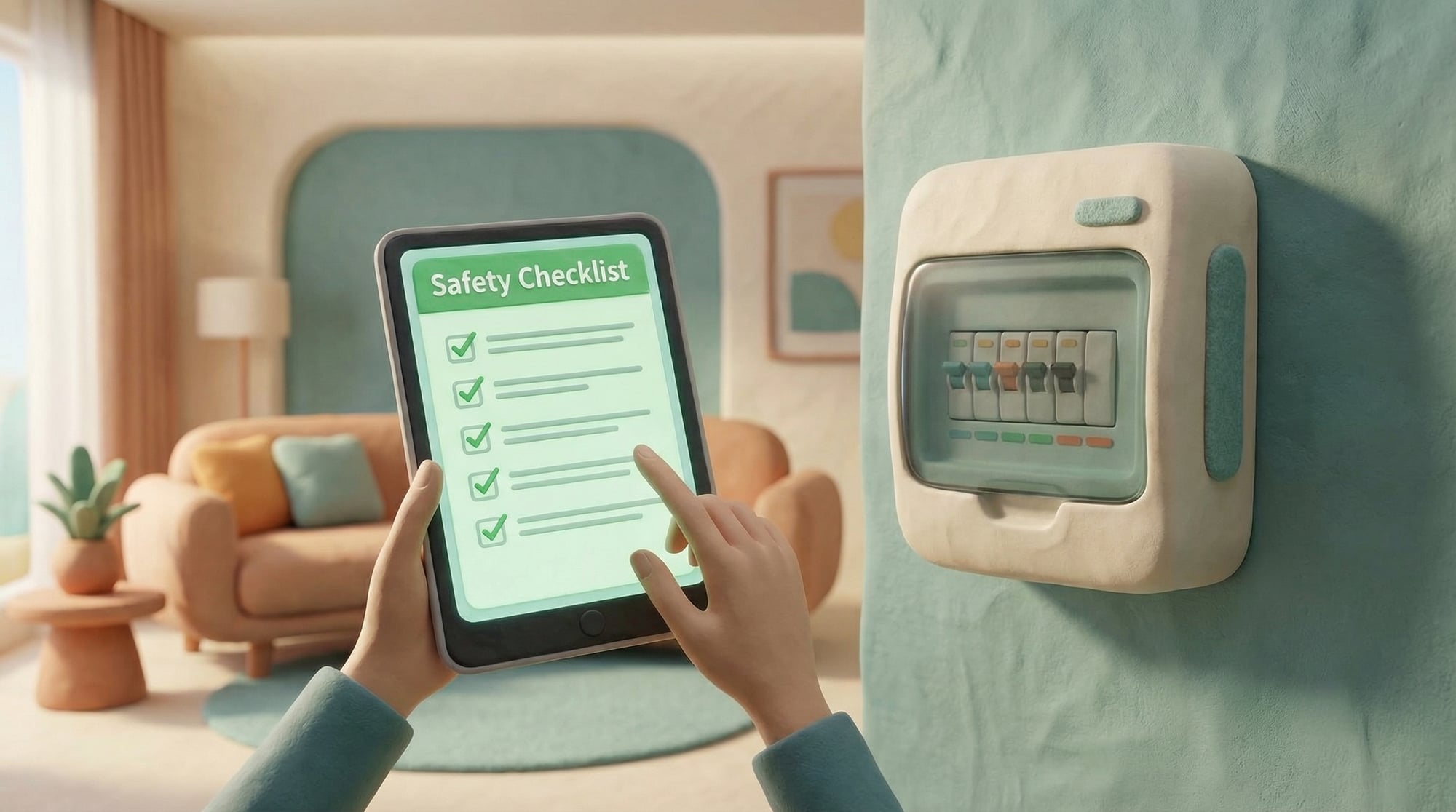
Ensure your property is safe and compliant with the latest electrical safety regulations for holiday lets. Learn how a valid EICR protects your guests and your business from risk.
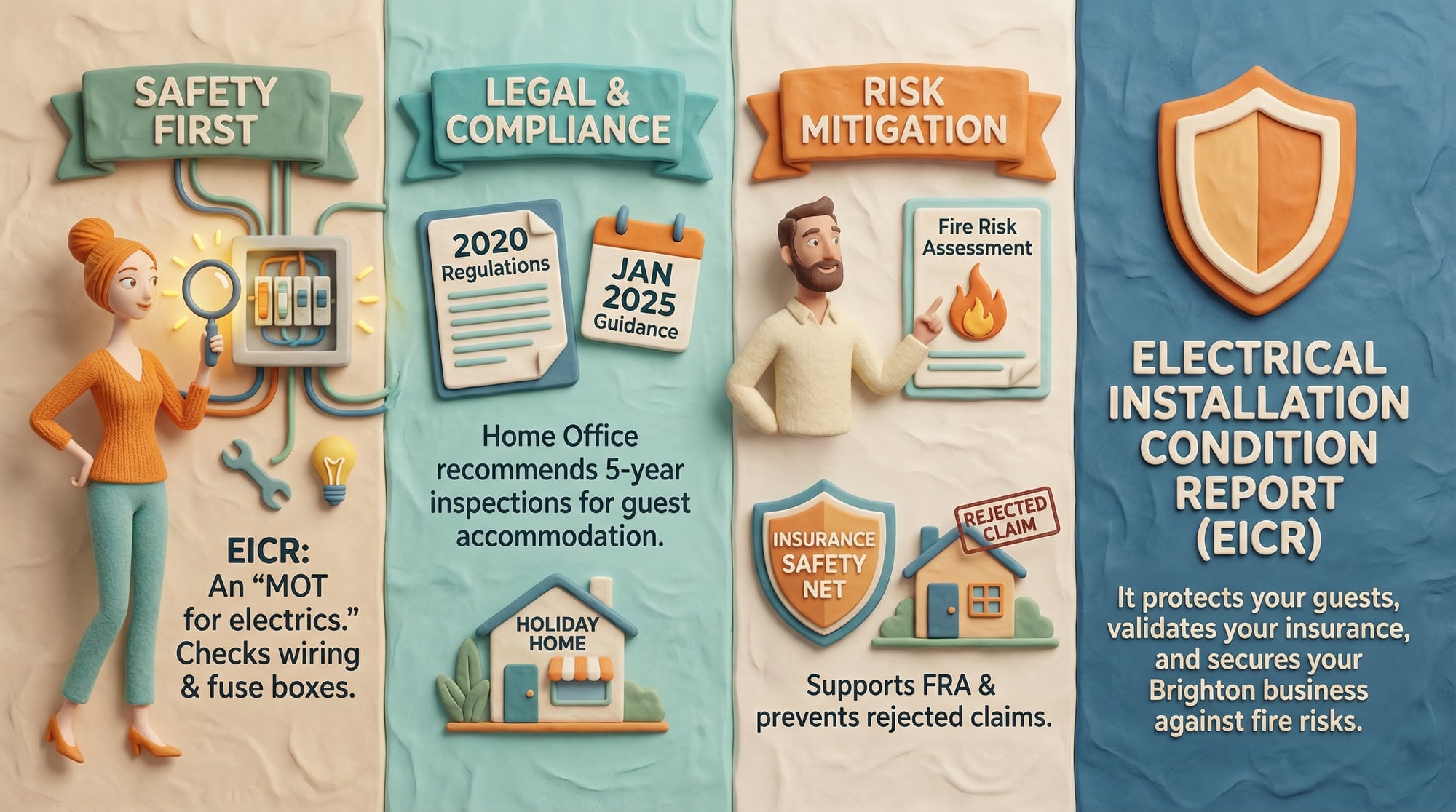
Running a successful holiday let in Brighton & Hove means keeping your guests safe and your business protected. An Electrical Installation Condition Report (EICR) is often described as an MOT for your property’s electrics. It’s a formal check-up by a qualified electrician to make sure everything from your fuse box to your light switches is up to scratch.
The legal reality for Brighton hosts
The rules around electrical safety can feel like a maze. In England, the 2020 Electrical Safety Regulations legally require landlords to have an EICR at least every five years for "specified tenancies", basically, properties where the tenant lives there as their main home.
Technically, these specific regulations don't directly force a host of a standard short-term holiday let in Brighton & Hove to have one just because it’s a holiday stay. But that doesn't mean you're off the hook. Wider safety laws like the Electricity at Work Regulations 1989 still apply if you have staff, like cleaners or maintenance teams, visiting the property.
More importantly, the Home Office's fire safety guidance for paying guest accommodation, updated in January 2025, strongly recommends that any property providing guest accommodation should undergo a formal electrical inspection and test at least every five years. For us here in Brighton, local authorities are stepping up scrutiny, and having an in-date EICR is now the standard expectation for any professional host.
Why it's your best "insurance policy"
Even if the law feels a bit grey in some corners, your insurance company likely sees things in black and white. Many specialist holiday let insurers now include terms requiring proof that electrical installations are safe and well maintained. Some policies explicitly require a valid EICR and may reject claims if one isn't in place.
If a fault in a toaster or an old circuit in your holiday home causes a fire and you don't have a valid EICR, your insurer could reject your claim. Having that certificate is your evidence that you’ve taken "reasonable care".
Integrating safety with your Fire Risk Assessment
Electrical faults are a leading cause of domestic fires, which is why your EICR is a foundational part of your broader safety strategy. Guidance for making your small paying guest accommodation safe from fire was published in March 2023. From 1 October 2023, all businesses are required to record their Fire Risk Assessment. A valid EICR provides the technical evidence that your hardwired system isn't a fire hazard, directly supporting your FRA findings. By linking these two documents, you ensure that high-risk areas, like older consumer units, are professionally managed as part of your guest safety plan.
What happens during the test?
A qualified electrician, ideally registered with a body like NICEIC or NAPIT, will spend a few hours testing your circuits. They're looking for things like:
The consumer unit (fuse board): Making sure it’s modern and correctly labelled.
Fixed wiring: Checking circuits hidden in your walls and ceilings.
Earthing and bonding: Confirming that metalwork like your pipework is bonded to reduce shock risks.
RCD performance: Testing the devices that quickly shut off power in the event of a fault.
After the visit, you’ll get a report. If it’s marked "Unsatisfactory," it will list observations coded by risk. C1 means danger is present and needs immediate action, while C2 means something is potentially dangerous and needs fixing within 28 days. A C3 code is just an improvement recommendation, it doesn't fail your report, but it’s often worth doing to future-proof your Hove townhouse.
EICR vs PAT: Know the difference
It’s easy to get your wires crossed here. An EICR covers the "hard-wired" system. Guests, however, interact with portable items every day, kettles, hair dryers, and bedside lamps.
While Portable Appliance Testing (PAT) isn't a direct legal requirement for English holiday lets yet, you still have a duty of care to ensure all equipment is safe as part of your fire risk assessment. We recommend having a professional conduct PAT testing on an annual basis alongside your five-yearly EICR. Between guests, it’s always good practice to do a quick visual check for frayed cables or scorch marks on plugs.
Staying ahead of the rules
With a national registration scheme for short-term lets in England now in testing (as of late 2025), Brighton & Hove hosts who keep robust safety records will be well placed as rules evolve.
An EICR typically costs between £150 and £300 depending on the size of your property. When you consider that it lasts for five years, it’s a small price to pay for peace of mind and protecting your investment.